February 27, 2026
8 Vibe Coding Styles Everyone Is Stealing in 2026
Many people want to learn Vibe Coding but either:
- Don’t know the name of the design style they want, or
- Don’t know how to prompt the AI to get it.
It’s like you have a superpower but you don’t know the magic words.
You see a sick website and think, “I want that feeling.”
But when you go to an AI tool, you type in “a cool website for my company” and get back something that looks like it was designed by a committee in 2015.
Generic. Boring. Forgettable.
So, what’s the solution?
I have created a guide “8 Vibe Coding Styles Everyone is Stealing in 2026.”
It’s a simple plug-and-play book that names the styles (like Glassmorphism & Retro Nostalgia), and all you need to do is insert your industry or what you are doing (e.g. selling a ticket event, home page for a kindy, etc.)
In 2026, AI will build everything. Your only competitive advantage is taste. Luckily, that’s something we can learn.
Go steal these styles and build something awesome.
How to Use This Guide
The concept is dead simple.
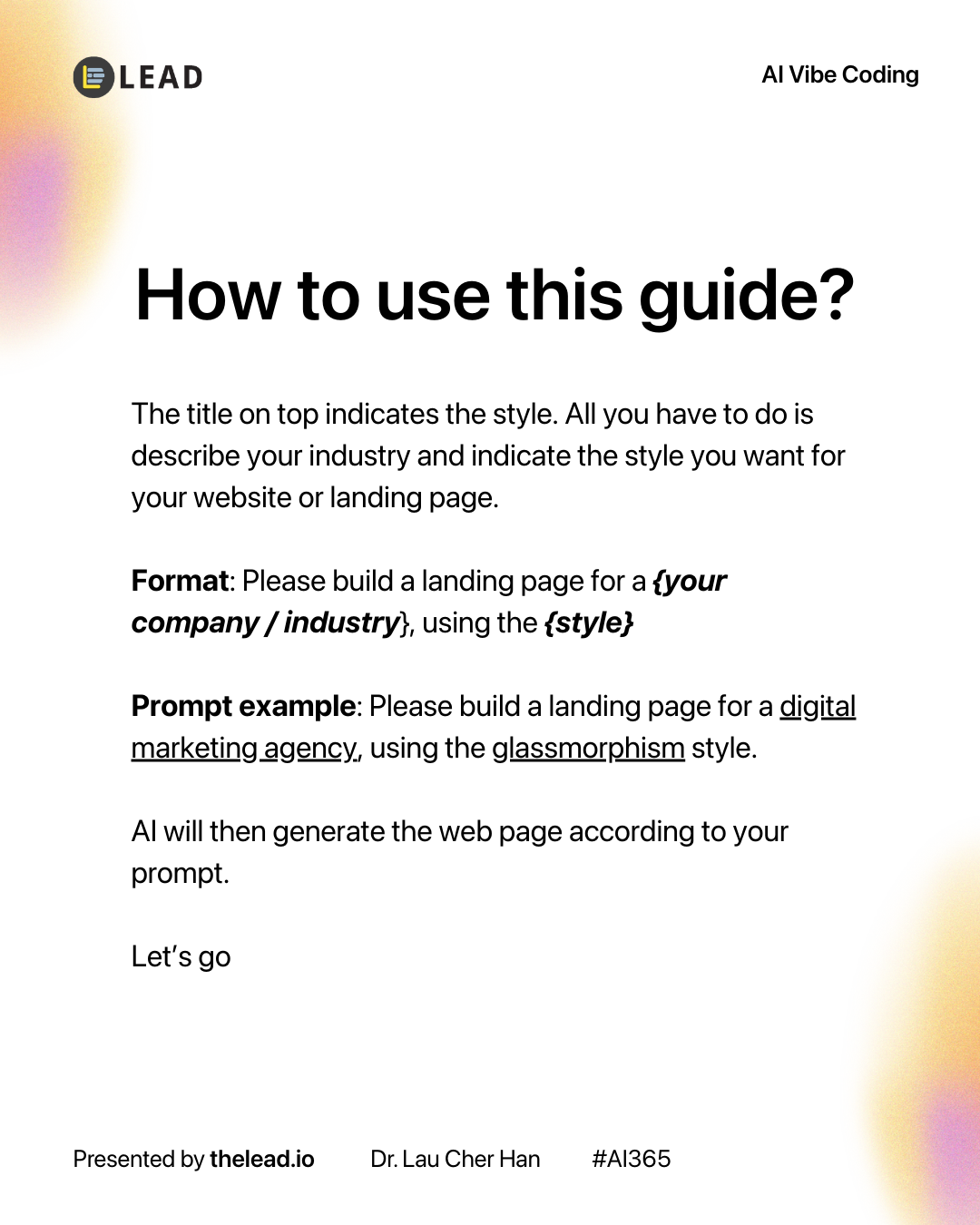
The title on top indicates the style. All you have to do is describe your industry and indicate the style you want for your website or landing page.
Format: Please build a landing page for a {your company / industry}, using the {style}.
Prompt example: Please build a landing page for a digital marketing agency, using the glassmorphism style.
AI will then generate the web page according to your prompt.
Let’s go.
1. Glassmorphism
This one is everywhere right now. And for good reason.
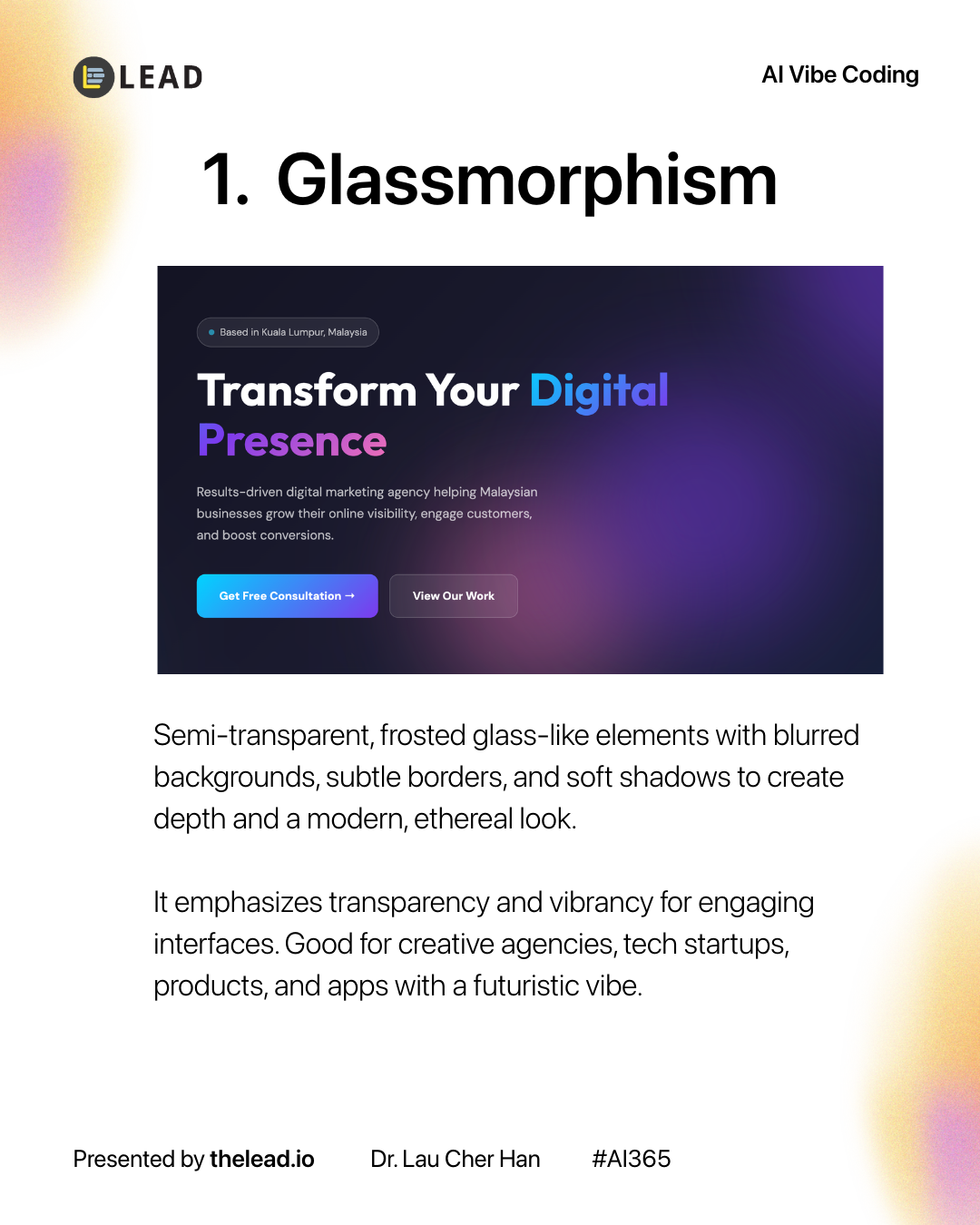
Semi-transparent, frosted glass-like elements with blurred backgrounds, subtle borders, and soft shadows to create depth and a modern, ethereal look.
It emphasizes transparency and vibrancy for engaging interfaces.
Best for: Creative agencies, tech startups, products, and apps with a futuristic vibe.
Prompt: “Please build a landing page for a {your company / industry}, using the glassmorphism style.”
2. Minimalist
Less is more. And it’s not going anywhere.
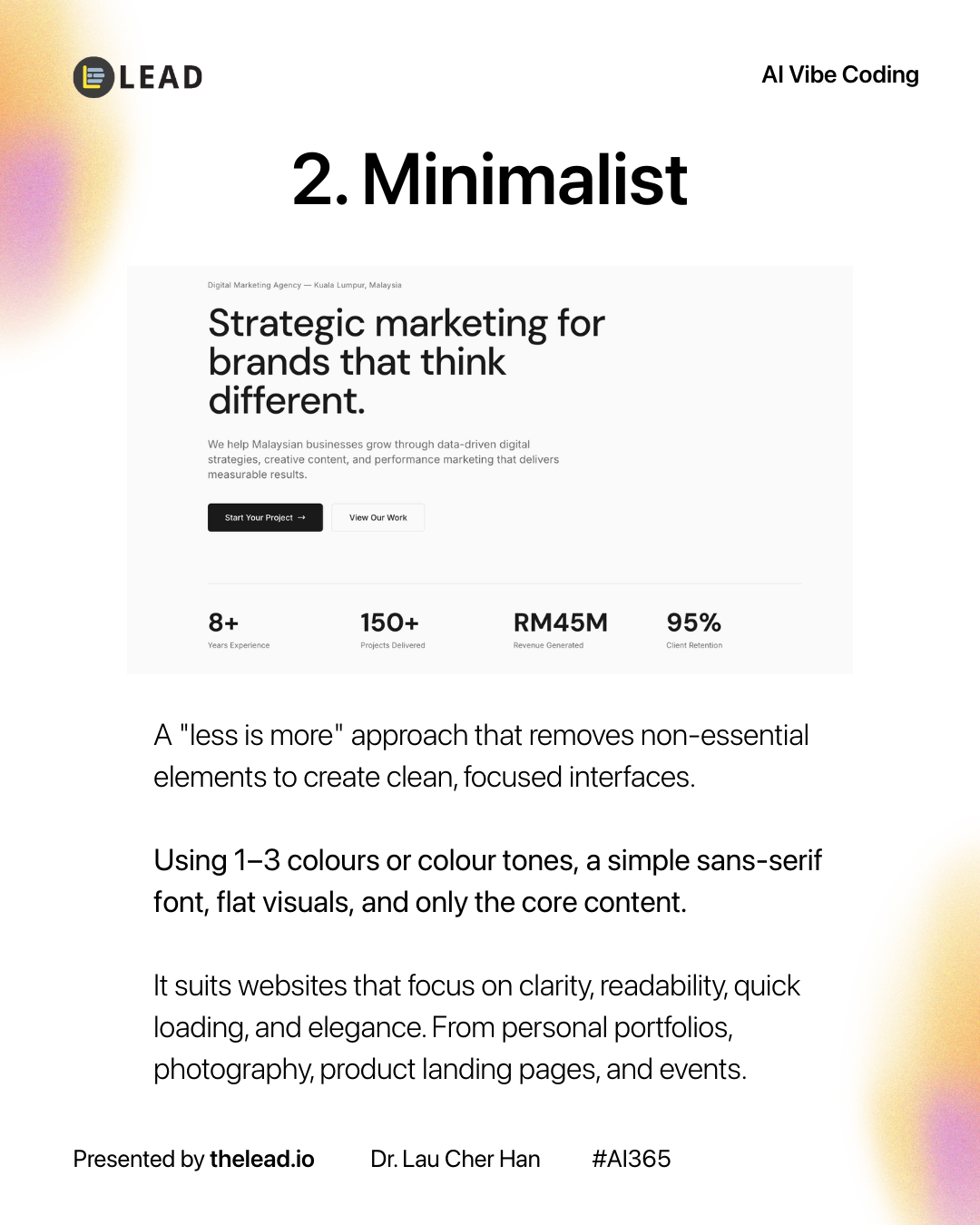
A “less is more” approach that removes non-essential elements to create clean, focused interfaces.
Using 1-3 colours or colour tones, a simple sans-serif font, flat visuals, and only the core content.
Best for: Personal portfolios, photography, product landing pages, and events. Websites that focus on clarity, readability, quick loading, and elegance.
Prompt: “Please build a landing page for a {your company / industry}, using the minimalist style.”
3. Bold Expressive
Want to make a statement? This is the one.
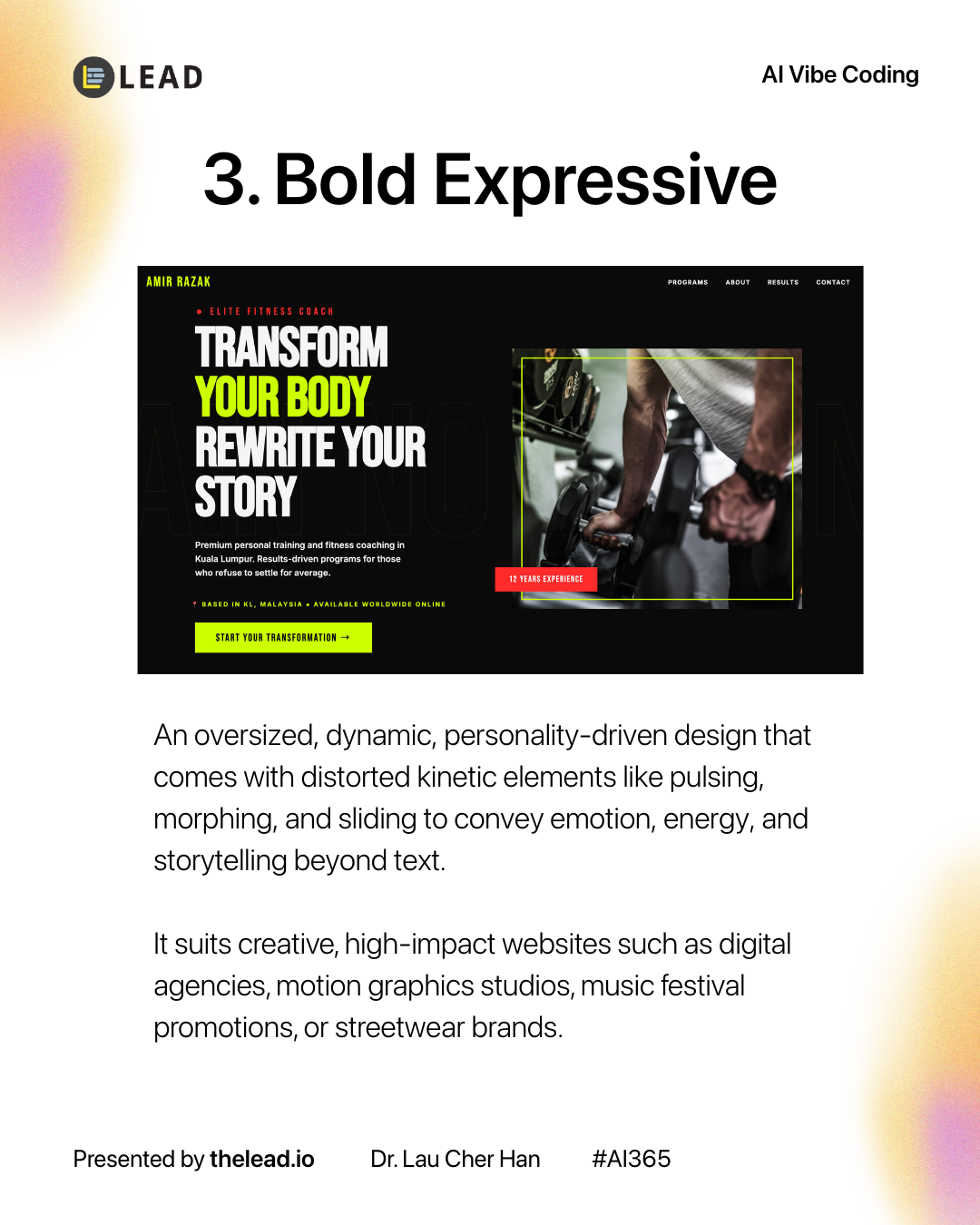
An oversized, dynamic, personality-driven design that comes with distorted kinetic elements like pulsing, morphing, and sliding to convey emotion, energy, and storytelling beyond text.
Best for: Creative, high-impact websites such as digital agencies, motion graphics studios, music festival promotions, or streetwear brands.
Prompt: “Please build a landing page for a {your company / industry}, using the bold expressive style.”
4. Retro Nostalgia
This style hits different. It triggers emotion instantly.
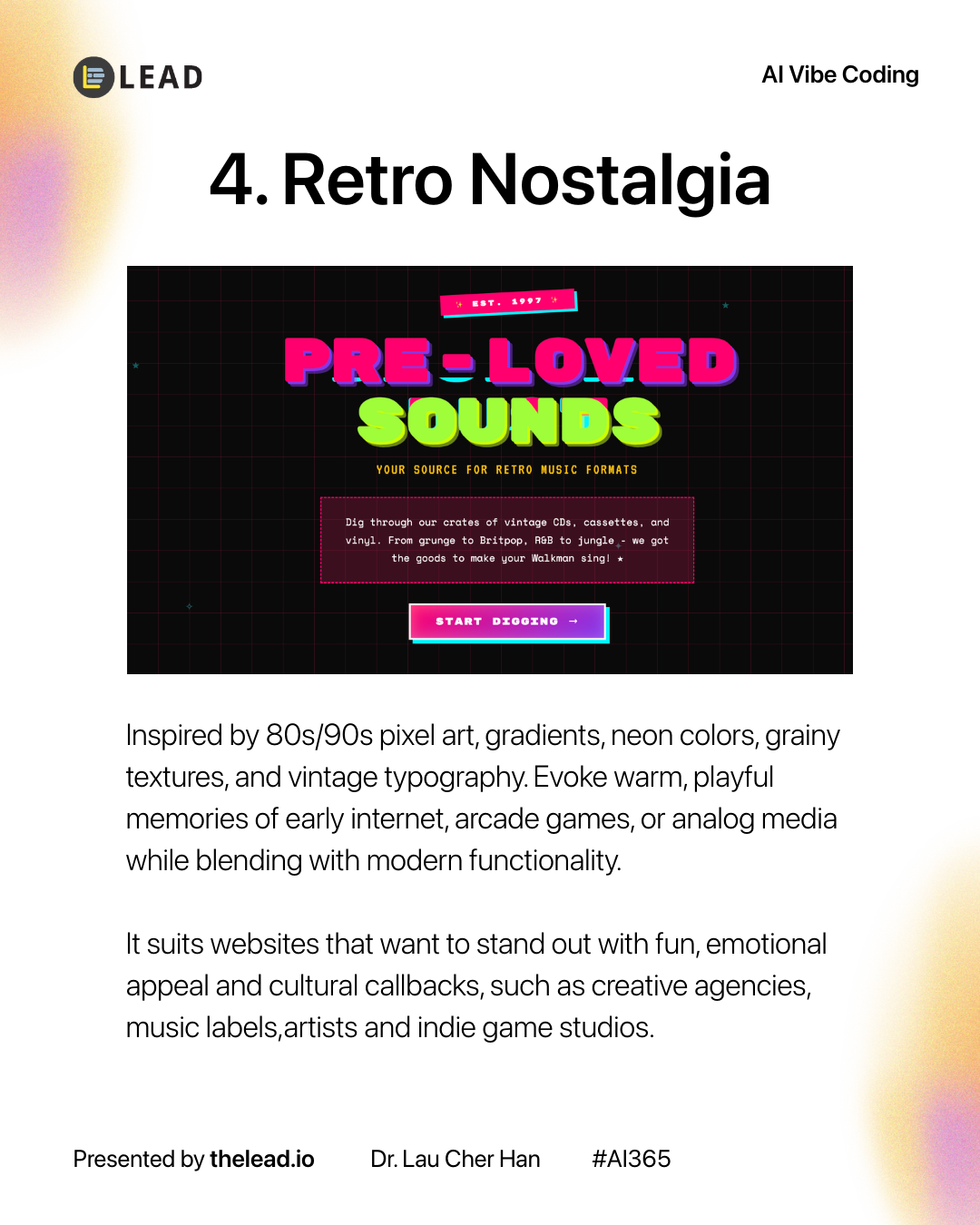
Inspired by 80s/90s pixel art, gradients, neon colors, grainy textures, and vintage typography. Evoke warm, playful memories of early internet, arcade games, or analog media while blending with modern functionality.
Best for: Creative agencies, music labels, artists, and indie game studios. Websites that want to stand out with fun, emotional appeal and cultural callbacks.
Prompt: “Please build a landing page for a {your company / industry}, using the retro nostalgia style.”
5. Editorial Moodboard
Think Vogue. Think Monocle. Think premium.
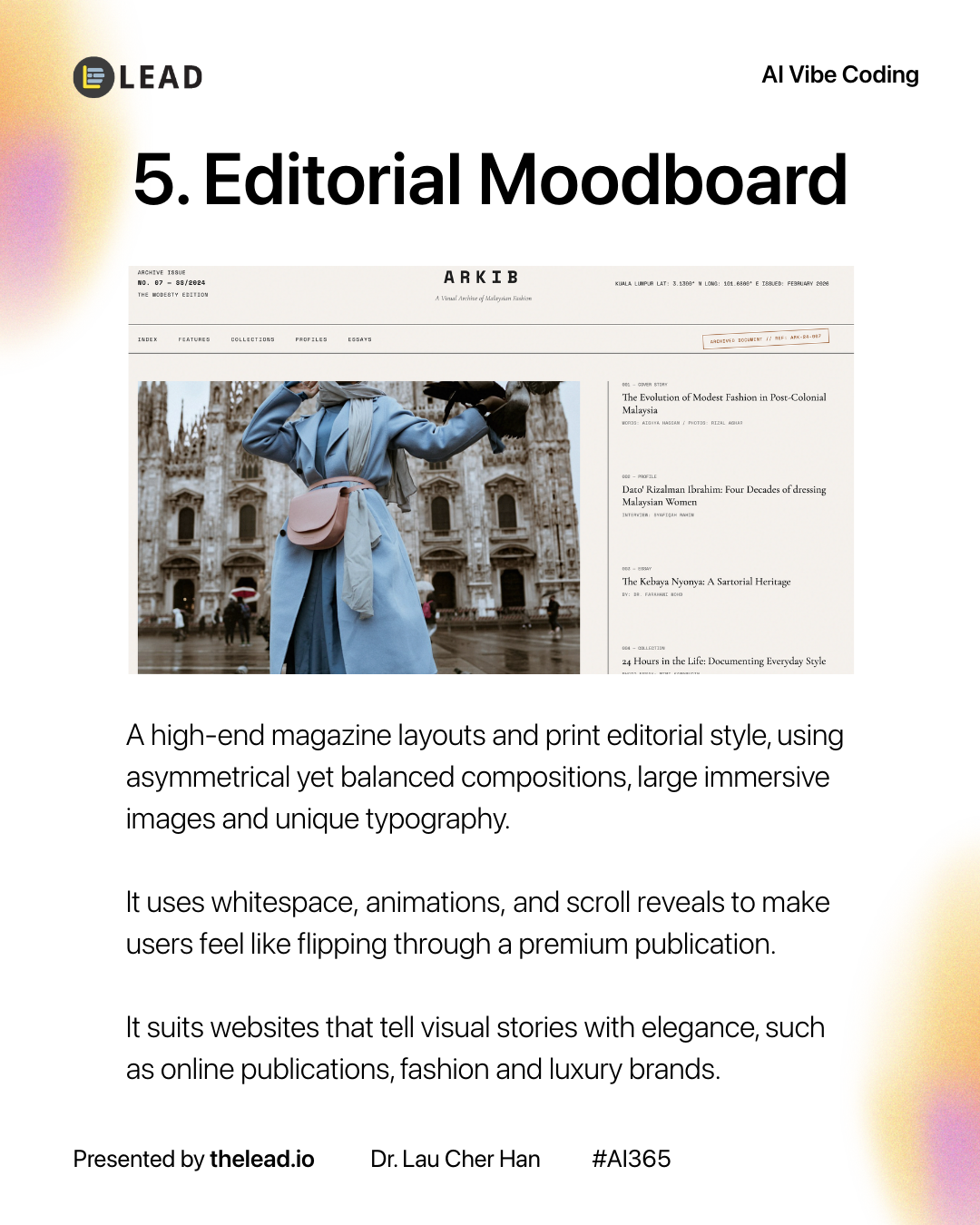
A high-end magazine layout and print editorial style, using asymmetrical yet balanced compositions, large immersive images, and unique typography.
It uses whitespace, animations, and scroll reveals to make users feel like flipping through a premium publication.
Best for: Online publications, fashion and luxury brands. Websites that tell visual stories with elegance.
Prompt: “Please build a landing page for a {your company / industry}, using the editorial moodboard style.”
6. 3D Immersive
This is the “wow” factor style. People stop scrolling when they see this.
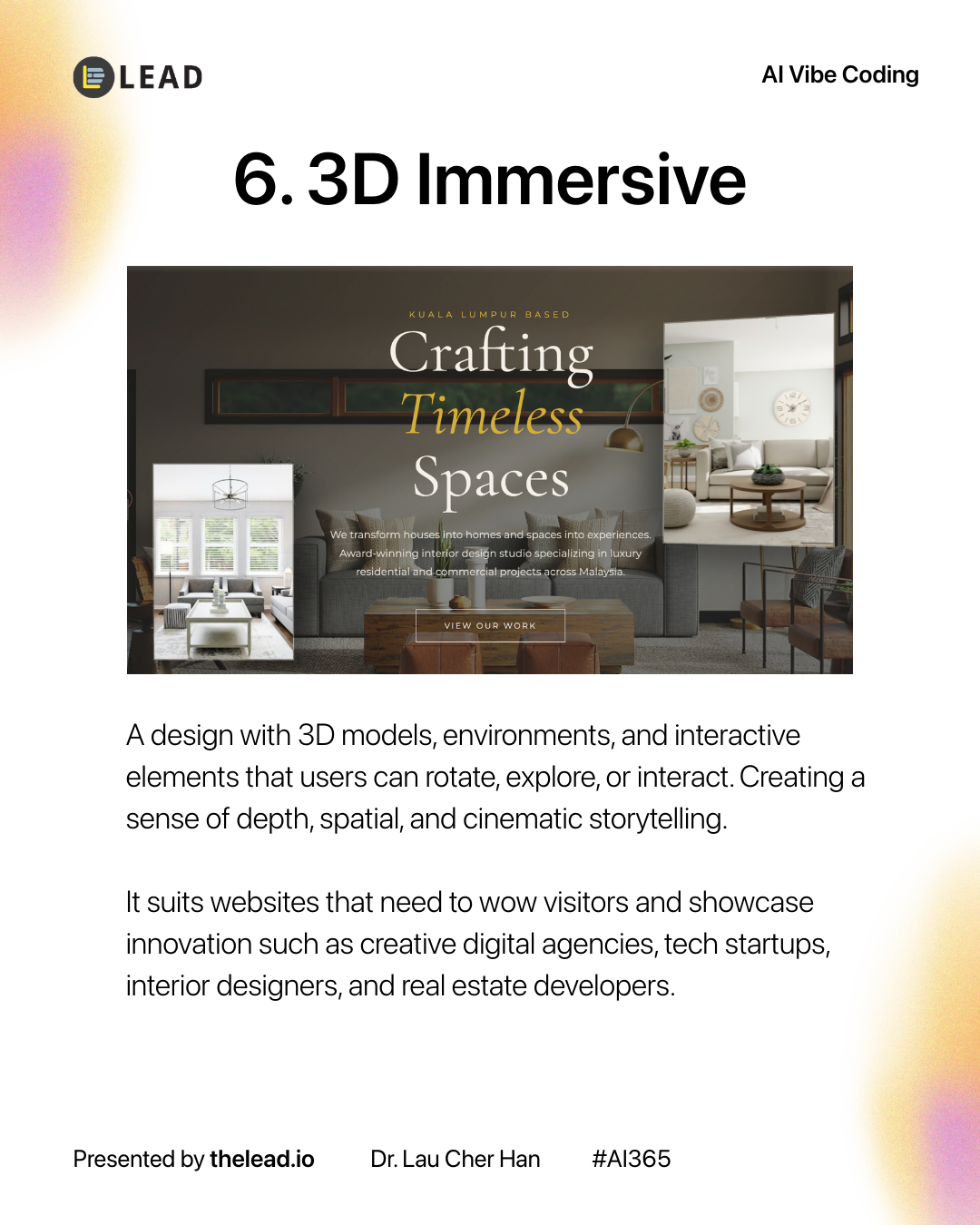
A design with 3D models, environments, and interactive elements that users can rotate, explore, or interact. Creating a sense of depth, spatial, and cinematic storytelling.
Best for: Creative digital agencies, tech startups, interior designers, and real estate developers. Websites that need to wow visitors and showcase innovation.
Prompt: “Please build a landing page for a {your company / industry}, using the 3D immersive style.”
7. Organic Anti-Grid
Rigid grids feel corporate. This style feels human.
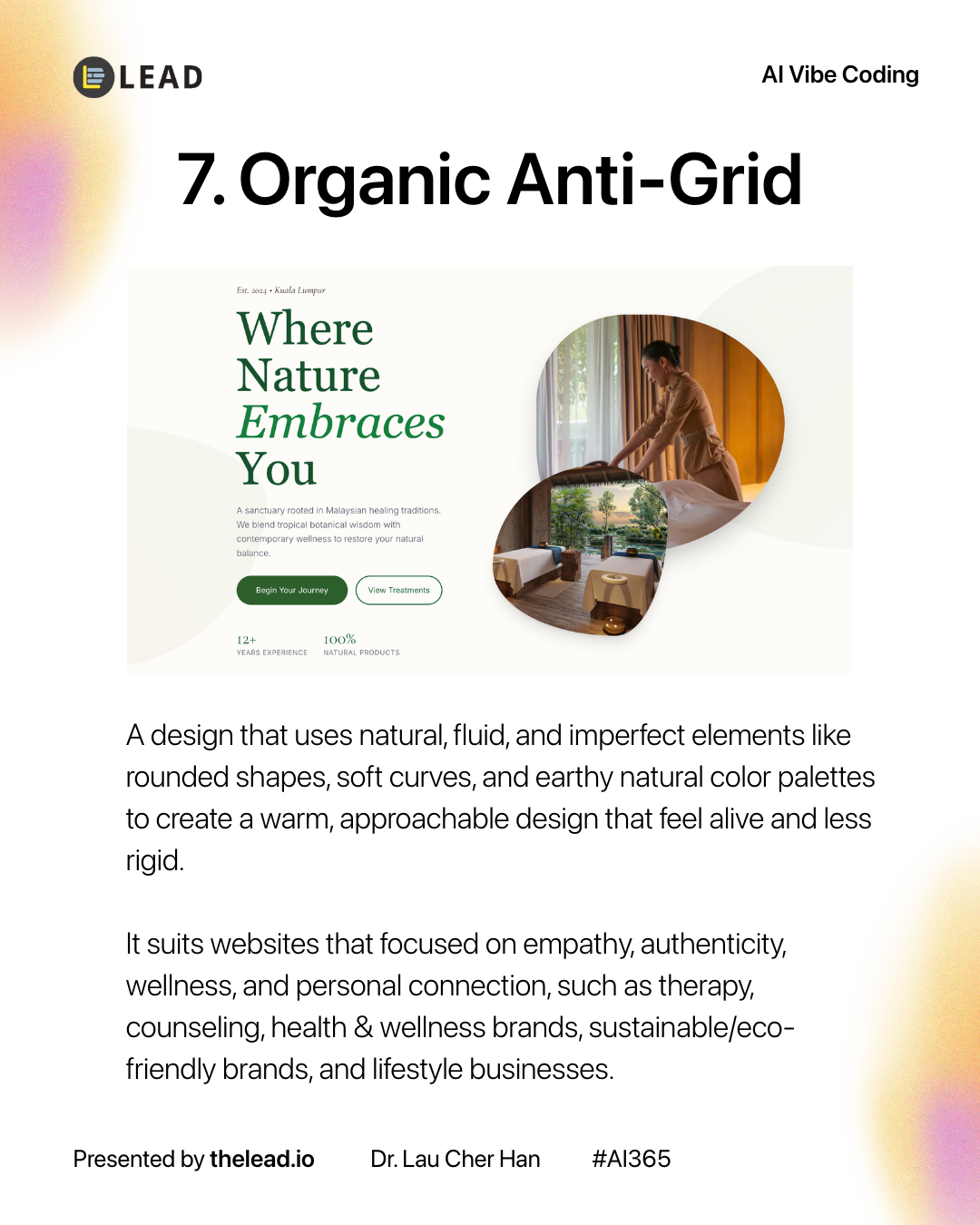
A design that uses natural, fluid, and imperfect elements like rounded shapes, soft curves, and earthy natural color palettes to create a warm, approachable design that feels alive and less rigid.
Best for: Therapy, counseling, health & wellness brands, sustainable/eco-friendly brands, and lifestyle businesses. Websites that focus on empathy, authenticity, wellness, and personal connection.
Prompt: “Please build a landing page for a {your company / industry}, using the organic anti-grid style.”
8. Sketch Hand-drawn
This one feels personal. Like someone actually made it with their hands.
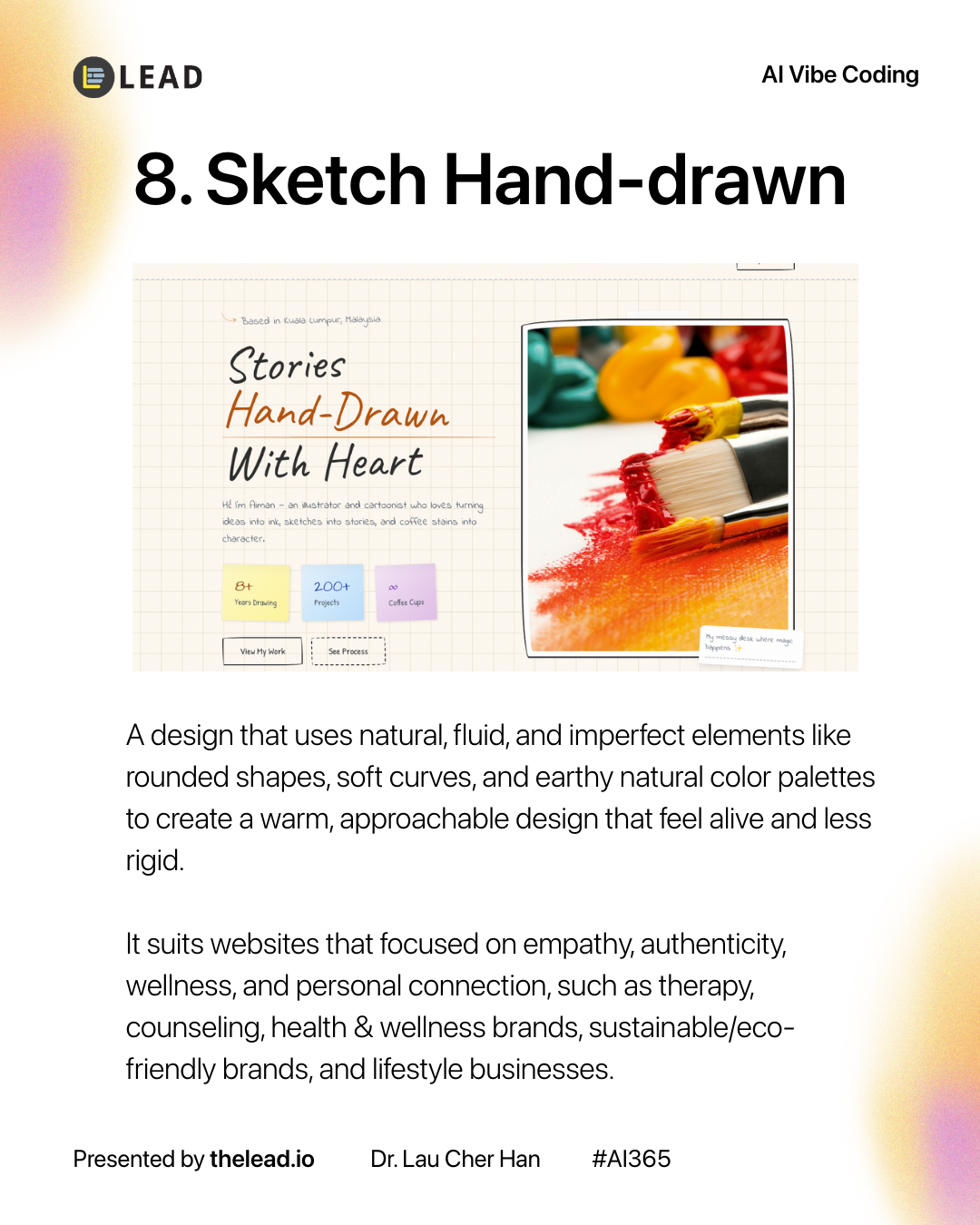
A design that uses natural, fluid, and imperfect elements like rounded shapes, soft curves, and earthy natural color palettes to create a warm, approachable design that feels alive and less rigid.
Best for: Therapy, counseling, health & wellness brands, sustainable/eco-friendly brands, and lifestyle businesses. Websites that focus on empathy, authenticity, wellness, and personal connection.
Prompt: “Please build a landing page for a {your company / industry}, using the sketch hand-drawn style.”
Which Is Your Favourite?
Here’s the bottom line:
In 2026, everyone will have access to the same AI tools. The same models. The same code generation.
The difference between a forgettable website and one that stops people mid-scroll?
The style you choose.
Now you have 8 of them. Named. Described. Ready to prompt.
Pick one. Try it. Build something that actually looks like you made a deliberate design choice — not like you clicked “generate” and hoped for the best.
Your move.